Most homeowners only think about their roof twice: when it's put on, and when something goes wrong. In between, it's easy to miss the early signs that a repair won't cut it anymore. Here's what we actually look for on a survey, and — just as importantly — what doesn't automatically mean you need a new roof.
How long should a roof actually last?
It depends entirely on the material. Natural slate, properly installed, can last 75-100+ years — some of the oldest roofs in Dorset and Hampshire are still on their original slate. Concrete tile typically manages 40-60 years. Clay tile sits somewhere in between. Felt and modern GRP flat roofing systems are a different story again, usually 20-25 years for a well-installed system. So "how old is too old" genuinely depends on what's actually up there — a 30-year-old slate roof might have decades left in it, while a 25-year-old flat roof is exactly where you'd expect problems to start.
The 7 signs worth taking seriously
1. Multiple missing or slipped tiles/slates, not just one or two. A single slipped tile after a storm is a repair. If you're finding several every time you look, or they keep coming loose in the same area, the fixings holding them (nails or battens) are likely failing more broadly — that's a pattern, not a one-off.
2. Sagging anywhere along the roofline. A roof should be a straight, even line from the ridge down. Any dip or sag — even a subtle one — usually means something structural underneath (rafters, battens, or the decking itself) has weakened, often from long-term water ingress. This is one of the few signs we won't try to talk around: sagging almost always means more than a surface repair.
3. Daylight visible through the roof from inside the loft. If you can see pinpricks of light coming through when you're up in the loft during the day, water can get in the same way. Small gaps like this are often fixable, but if there are several spread across different areas, it points to more widespread wear.
4. Granules building up in the gutters. On tiled and felt roofs, a certain amount of granule loss over the decades is normal. But if you're clearing noticeably more out of the gutters than you used to, the protective surface is wearing thin faster than it should.
5. Damp patches or staining on ceilings that come back after being fixed. One damp patch, sorted once, and never seen again — that's a successful repair. A patch that reappears in the same spot, or new patches appearing elsewhere, usually means water is finding a new path in faster than individual patches can keep up with.
6. Valleys and flashing that have visibly deteriorated. Roof valleys (where two roof slopes meet) and the lead flashing around chimneys and walls take the most water flow on the whole roof. Cracked, lifted, or green-stained (verdigris) lead, or a valley that's visibly corroded, is often where a "repair vs replace" decision actually gets made — because these areas are disproportionately responsible for leaks even on an otherwise sound roof.
7. The roof is at or past its material's expected lifespan and multiple issues are showing up together. One issue on its own, on a roof of any age, is usually a repair. Several of the above showing up around the same time, on a roof that's already at the upper end of what its material typically manages, is when replacement genuinely becomes the more sensible spend — not because of the age number itself, but because you're paying for repair after repair on a roof that's reaching the end of what it was built to do.
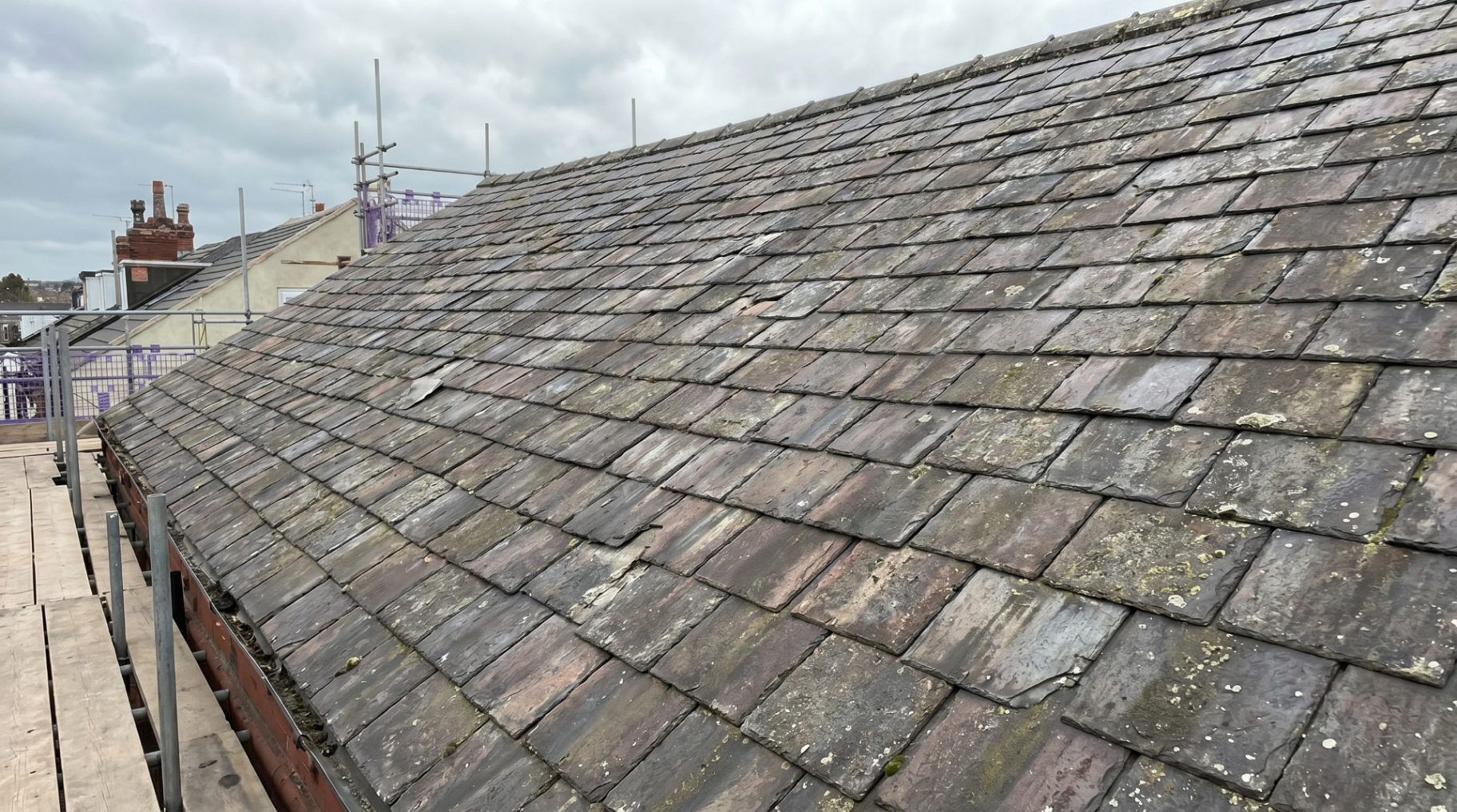
Tired, mossy slate roof
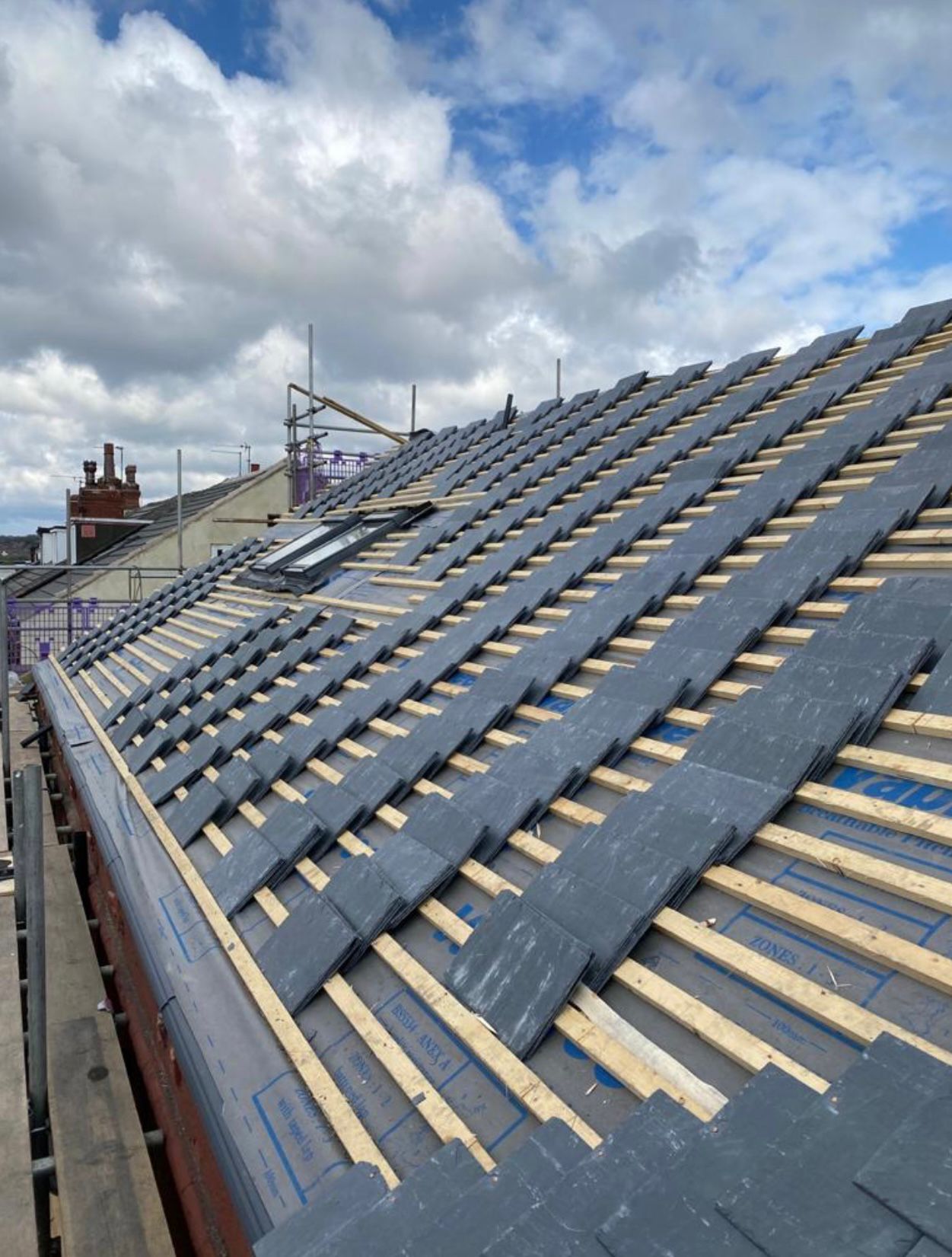
New breathable membrane, battens and slate
BeforeAfterThree things that don't automatically mean "replace it"
A single slipped or cracked tile. This is one of the most common repair callouts we get, and it's almost always a straightforward spot fix — not a sign the whole roof is failing.
Moss or algae growth. It looks worse than it usually is. A roof clean removes moss, algae and lichen that trap moisture against the surface, and in most cases that's all that's needed — not a full re-roof.
General cosmetic weathering with no functional issues. Tiles fading in colour, or looking a bit tired, isn't the same as tiles failing. If there's no leak, no sagging, and nothing structural showing up on inspection, a roof can look "old" and still have plenty of life left.
What an inspection actually checks
A proper roof inspection — the kind worth having before you commit to either a repair or a full replacement — covers the tiles or slates themselves, the flashing and valleys, the ridge line, the guttering, and any visible signs of damp from inside the loft. It usually takes 30-60 minutes depending on the size and access of the roof. If you're buying a property, this is worth doing before you commit, not after — a roof issue found during a survey is a negotiating point; the same issue found three months after moving in is just a bill.
The honest answer
If you're seeing one or two of the signs above in isolation, it's very likely a repair, and we'll say so — we don't push a full re-roof when a repair will genuinely do the job. If you're seeing several together, especially sagging or a pattern of recurring leaks, that's when a proper survey earns its keep: it tells you which category you're actually in before you spend money on the wrong fix.
- We'll tell you honestly whether a repair will do
- You'll get a clear written quote with no pressure
- Every option is explained in plain English
Free surveys are the easiest way to find out which situation applies to your roof specifically — get in touch and we'll take a proper look before recommending anything.