Spray foam roof insulation had a moment — for a while it was marketed as a quick, cheap way to insulate a loft, and a lot of it went in during the 2000s and 2010s. Now it's often the reason a house sale falls through. Here's what's actually going on, and what removal involves if you're one of the many homeowners dealing with it.
Why spray foam became a problem
Spray foam insulation is applied directly onto the underside of the roof covering — sprayed straight onto the felt, battens, and the underside of the tiles or slates themselves. The idea was to seal the roof structure completely and stop heat loss at the source. In practice, this created a specific problem: timber roof structures need to be able to dry out. Wood naturally absorbs and releases moisture over time, and roofs are also exposed to small amounts of moisture ingress even when everything's working correctly — a bit of condensation, a small amount of driven rain finding its way in. When spray foam seals the timber completely, that moisture has nowhere to go. It gets trapped against the wood instead of drying out, and over years that leads to rot — often invisible from below, because the foam itself hides the timber from view during a normal visual inspection.
The mortgage and survey issue
This is the part that actually forces most people into removal. Since the mid-2010s, many mortgage lenders and surveyors have become far more cautious about spray foam roof insulation, particularly closed-cell foam. A standard mortgage valuation or RICS survey will often flag spray foam as a defect requiring further investigation — sometimes leading a lender to decline the mortgage outright until it's removed and the roof timbers are inspected and confirmed sound. If you're selling, or a buyer's surveyor flags it, removal frequently becomes a condition of the sale proceeding at all. This is the single biggest reason we get called about spray foam — not because homeowners are unhappy with how it performs, but because it's actively blocking a sale.
Many homeowners only discover the problem when a buyer's survey flags the spray foam — right when they're trying to move.
Open-cell vs closed-cell — why it matters for removal
Not all spray foam is equal, and the type used makes a real difference to how the removal job goes.
Open-cell foam is softer, more flexible, and generally easier to remove. It tends to peel away from timber in larger sections without as much risk of damaging the wood underneath.
Closed-cell foam is denser, more rigid, and bonds much more aggressively to whatever it's sprayed onto. It's genuinely harder and more labour-intensive to remove, and there's a higher risk of taking small amounts of the timber's surface off with it if it's not done carefully.
Knowing which type is up there — which isn't always obvious just from looking — makes a real difference to how we quote and plan the job.
What the removal process actually involves
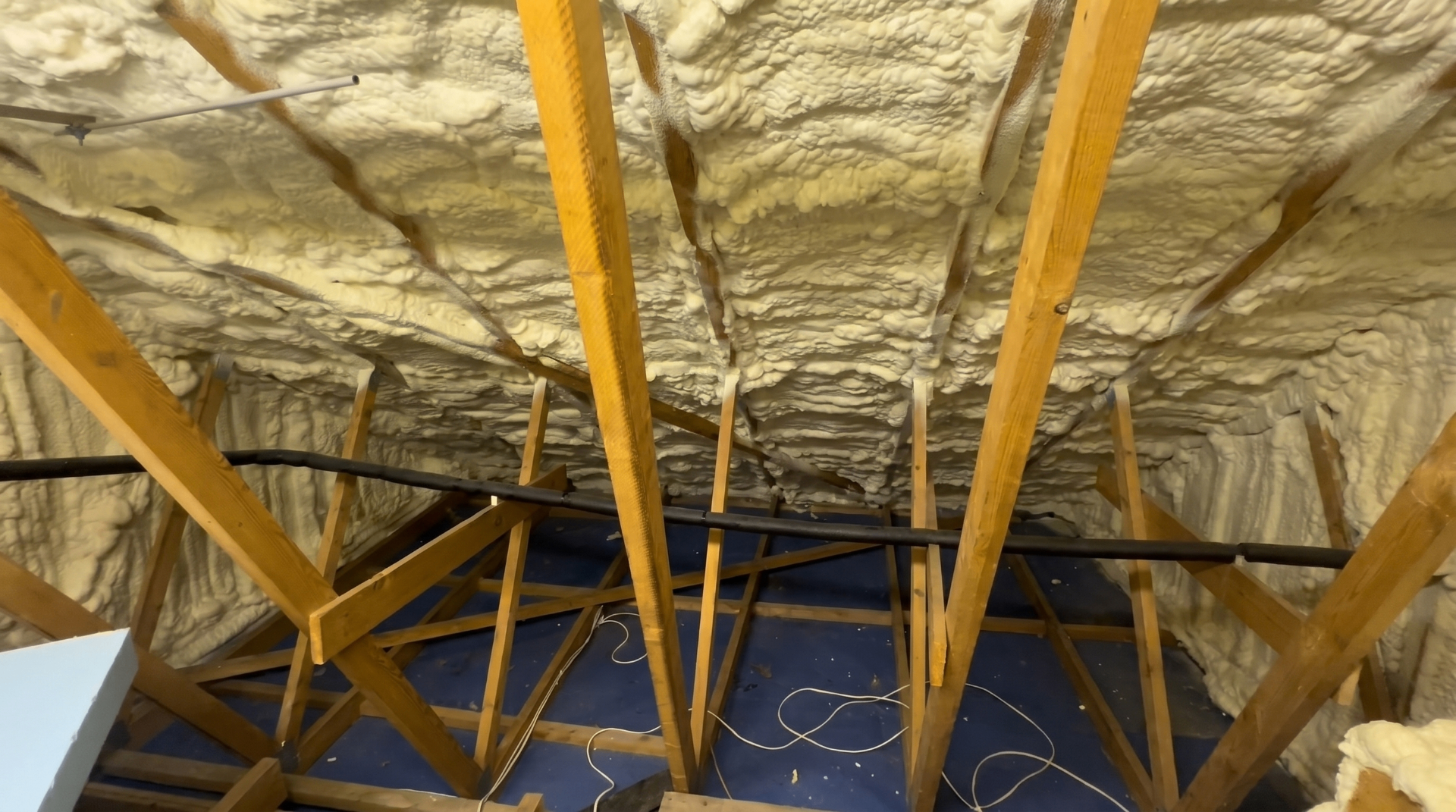
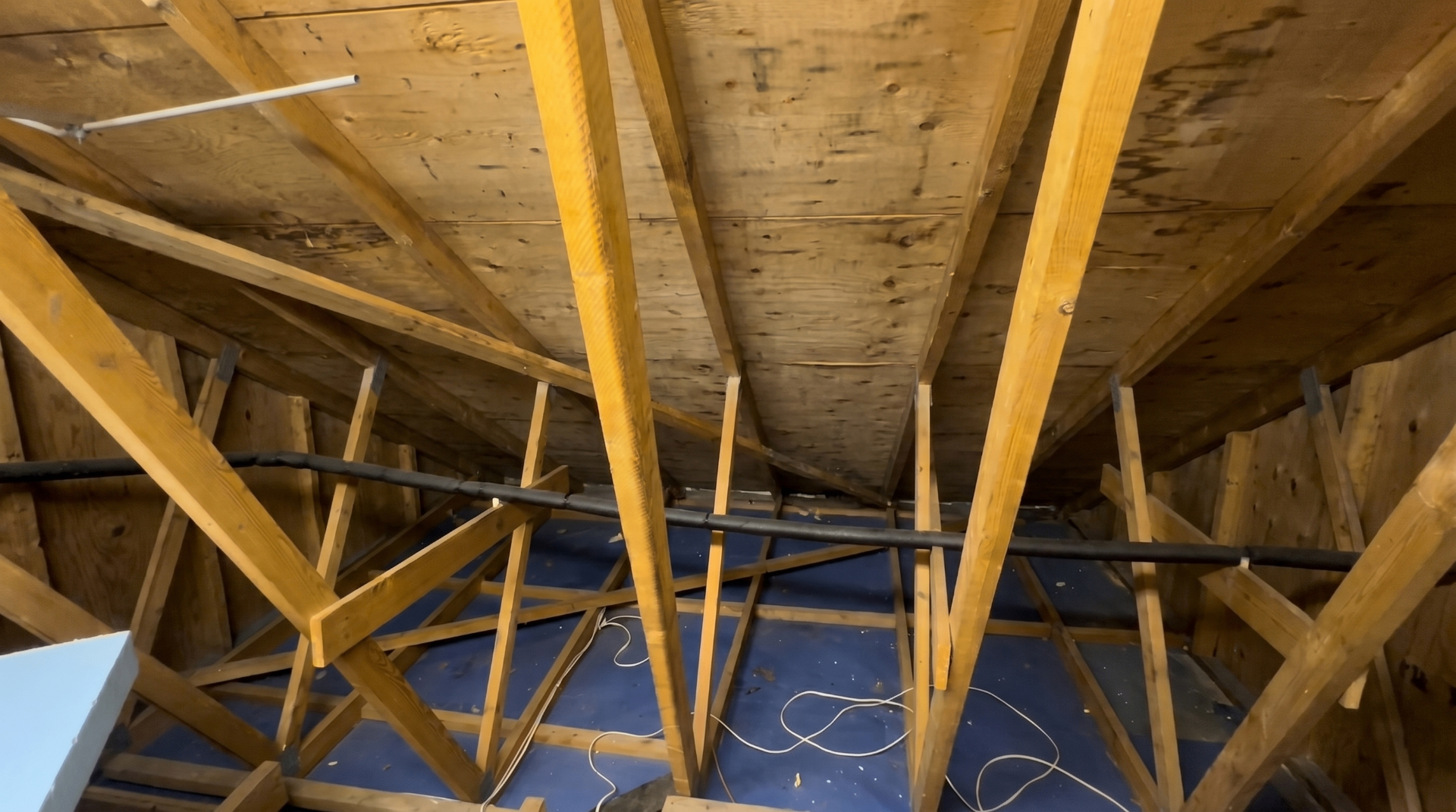
Rafters coated in spray foam
Clean, breathable roof space
BeforeAfterRemoval is a careful, mechanical process — the foam is worked away from the timber structure by hand, using appropriate tools for the foam type, rather than any kind of chemical stripping (which risks damaging the roof structure further). Once the foam is off, the real value of the job becomes visible: the timber underneath gets a proper inspection for the first time in years, sometimes decades. If the foam has been trapping moisture, this is when rot, if present, actually gets found and can be addressed — repairing or replacing affected timbers — rather than staying hidden under another layer of foam for another buyer to discover later.
Will removal damage sound timber?
Careful, correctly-done removal shouldn't damage timber that's still structurally sound. The risk isn't really in the removal technique itself when it's done properly — it's in what removal reveals. If the foam has already caused hidden rot, that timber needed addressing regardless of how it was uncovered; removal is what makes that visible rather than causing it.
What happens after removal
Once the foam is out and any timber repairs are complete, the loft or roof space typically needs proper insulation reinstated using a modern, breathable approach instead — one that manages moisture correctly rather than sealing it in. This is also a natural point to bring the property's insulation up to current standards, since you're already back to bare timber and starting from scratch.
We remove spray foam safely
We carefully remove problem spray foam, protect your timbers, clear all waste, and advise on a breathable way to re-insulate — so you can sell or remortgage without the headache.
Spray foam removalIs it a big job?
It varies. A straightforward open-cell removal on a smaller roof is a different scale of job to a closed-cell removal on a larger or more complex roof structure with hard-to-reach areas. This is exactly the kind of thing that's worth a proper look before any price gets quoted — foam type, roof size, access, and what condition the timber turns out to be in underneath all affect the job.
If you're dealing with this because of a sale
If a survey has flagged spray foam and you're under time pressure from a chain, the most useful first step is getting someone out to actually assess what type of foam it is and what's underneath it — that's what turns "the surveyor said it's a problem" into an actual scope of work and a timeline you can give the other side of the transaction.
- We identify the foam type before quoting
- Careful mechanical removal — no chemical stripping
- Full timber inspection once the foam is off
- Breathable re-insulation advice afterwards
Free, no-obligation surveys are the way to find out exactly what you're dealing with before committing to anything.